-
Registration & NetworkingThe Main Reception Room45 mins
-
The Great Hall5 mins
-
The Great Hall40 minsGet an exclusive view of the most recent Environment Analyst UK Market Assessment data, ahead of 2026 publication, providing a unique window into the environmental & sustainability consulting market dynamics, revenue breakdowns and growth opportunities.
)
-
The Great Hall25 mins
This presentation will share insights into the unique role of NISTA in supporting policy and investment decisions and project deliverability aligned to an ambition of sustainability no longer being an add-on but a core, non-negotiable driver of value, risk-reduction, and efficiency.
Hariom will outline NISTA’s sustainability activities and the challenges faced. She will also provide a forward view, taking a new spatial, portfolio approach to project support and detail how the sustainability eco-system players can contribute to this.

-
The Great Hall50 mins
The landscape of environmental regulation is currently undergoing its biggest change in decades. To help make sense of this, this session will provide a clear, practical overview of the most significant legal and regulatory developments shaping the sector and impacting on infrastructure delivery.
It will also evaluate the appointment of “Lead Environmental Regulators” and one “super regulator” (water) and the extent to which this will facilitate more joined-up approaches to achieving climate and sustainability goals in major infrastructure project delivery.
Speakers -
Rooms 1.4-1.550 mins
This session will showcase a number of UK & European infrastructure projects, providing real-world case study implementation of the key Summit themes, including nature-based solutions, improved social value and positive place outcomes.
Great Grid Partnership: Transforming Infrastructure Delivery Through Whole Lifecycle, Programmatic Delivery
Delivering the UK's energy transition requires a move away from project-by-project delivery towards programmatic delivery at scale at an unprecedented pace. The Great Grid Partnership (GGP) is applying a whole lifecycle approach across planning, consenting, environmental assessment, design, procurement, construction and commissioning; positioning itself as a new delivery model for major infrastructure programmes, enabling sustainability as one of the outcomes.
This presentation will demonstrate how this approach can deliver more consistent, predictable and sustainable outcomes for consumers, communities and the environment, and what this in turn means for consultants, contractors, the Client and the supply chain ecosystem:
-
Standardisation, design reuse and common ways of working are enabling greater efficiency, consistency and predictability across the programme
-
Sustainability is embedded within the delivery model rather than operating as a separate workstream, enabling consistent approaches to environmental outcomes including climate resilience, carbon reduction and social value
-
Lessons learned, innovation and continuous improvement are captured once and deployed across multiple projects, creating benefits beyond any individual scheme
-
The GGP is creating value for consumers, communities, the environment and the wider supply chain whilst helping build long-term capability across the infrastructure sector
Mersey Tidal Power: A Once-in-a-Generation Opportunity
The Mersey’s tidal range offers the potential to deliver clean, predictable power at a scale few UK projects can match.
This presentation will provide an update on the current status of the project, including ongoing development work and the evidence being gathered to assess technical, environmental and economic feasibility. It will also explore the next phases required to progress the scheme and the wider opportunities it presents for energy security, job creation, skills development, transport connectivity and place-making across the city region.
-







-
Morning Refreshments & NetworkingThe Main Reception Room30 mins
-
The Great Hall45 mins
-
Defining “best value” and how to measure this across different sectors and stakeholders:
-
to what extent can there be a standardised approach
-
clarifying the investor and regulator perspective on value
-
Setting baselines and methodology for measuring progress and outcomes, including forecasting future measurement requirements
-
Achieving consistency in accounting for wider value creation outside typical financial quantification
-
Successfully shifting mindset and language from “cost” to “investment”
-
Effectively balancing CAPEX & OPEX for better decision-making
-
How can we make financing infrastructure resilience “business as usual” – what is needed to evidence the impacts?
Speakers -
-
Rooms 1.4-1.545 mins
-
Discussing how a new political landscape will impact environmental policies and action – what are the emerging narratives around climate, nature and economic growth
-
Effectively making the case for environmental leadership and business growth
-
Speaking the right language for current politics and using the environment as a conduit for economic regeneration and local prosperity
-



-
The Great Hall45 mins
-
Identifying the required enablers for achieving large-scale, investable nature-based resilience and how to implement them
-
Evaluating risk-reporting frameworks and investment opportunities in natural capital
-
Integrating the social and community benefits into the RoI for nature-based solutions
-
Demonstrating measurable progress in implementation– what has worked, what hasn’t and how has nature created business value
-

-
Networking LunchThe Main Reception Room60 mins
-
The Great Hall60 mins
This session is an opportunity to break out into small groups to discuss challenges and explore best practices and innovative strategies relevant to each subject area. Attendees choose one topic discussion to participate in.
To explore roundtables please open the full session by clicking on the title.
Speakers -
Rooms 1.4-1.560 mins
As environmental professionals rely more heavily on AI to crunch sustainability metrics, model scenarios and draft impact reports, the energy used to run that analysis is becoming a measurable part of the organisation's own carbon account, and one that's often outside anyone's direct control. This workshop will explore how to take that control back, through:
- Understanding where AI's energy use actually comes from: why a single complex query can use as much power as an LED bulb left on for four hours, and how this scales across looped queries, analysts and projects
- Identifying the hidden costs of off-the-shelf AI tools: one fixed model for every task, "thinking" always switched on, and data sitting on someone else's servers
- Exploring how an agnostic AI infrastructure lets the business choose which model handles which job
- Evaluating the case for keeping data in-house and matching effort to task, as a lever for reducing both AI footprint and AI cost
Attendees will leave with a practical framework for assessing their own AI infrastructure choices and reducing the carbon and cost impact of their AI use.
 Speakers
)


)


)
-
Afternoon Refreshments & NetworkingThe Main Reception Room25 mins
-
The Great Hall45 mins
-
Reviewing the key challenges and opportunities with using AI and digital tools to accelerate planning and consenting timelines, produce and review EORs, and inform modelling and investment decisions:
-
where is the most meaningful real-world impact being seen?
-
overcoming multi-stakeholder challenges of adoption
-
optimising data usability and the benefits of bringing information to life for users
-
-
De-risking infrastructure investment and reducing CAPEX through improved asset design and extending asset lifespans
-
Managing governance structures around data integrity and having confidence in the source of “truth”:
-
achieving the correct balance between AI and human oversight
-
Delivering value through AI - changing client expectations of the role of the consultant
-
-
-
Rooms 1.4-1.545 mins
Most environmental consultancy leaders didn't choose leadership — they were promoted into it. Preparing Early Career Professionals as future leaders in our sector, early, is essential for their development.
This workshop is built around the ten principles that consistently make the difference for MDs, Directors and senior leaders in our sector — from managing your own mindset under pressure, to building teams that don't need you involved in every decision. Introducing these concepts early in professionals’ careers will reap huge rewards as they develop through their organisations.
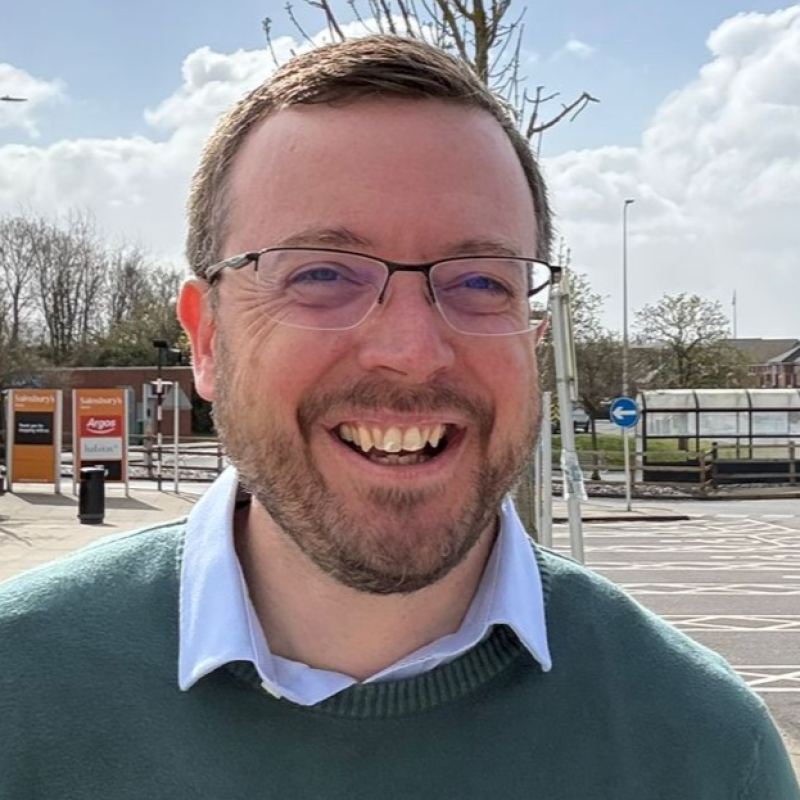
In this session Jon Gibbard, leadership expert in the environmental consulting sector, will use his experience and expertise to guide early career professionals through reflection and learning based on the leadership guide Jon has created from working as a, and with other, senior leaders in the sector.
The session is deliberately practical and peer-driven. You will bring your own live challenges, real case studies and genuine dilemmas that early career professionals like yourselves are experiencing in your organisations — and work through them in the room with people navigating similar experiences.
The frameworks provide the structure; your collective experience provides the insight. This is not a lecture; it’s practical experiential learning. Come ready to share, to challenge and to leave with a range of tools and techniques to do things differently when you return to the office.
Speakers




-
The Great Hall45 mins
-
Navigating global political uncertainty and regulatory changes: how, and from where, is infrastructure development and the energy transition being financed?
-
Scaling impact financing and identifying gaps to build a future pipeline
-
Leveraging sustainable financial instruments to de-risk infrastructure projects and achieve value creation:
-
creating confidence in the supply chain and the finance community
-
aligning public and private finance to enable scaleable investment pathways
-
taking a pre-emptive approach to risks and future expectations to maximise opportunities
-
Mobilising finance for “harder to finance” projects such as climate adaptation retrofits and nature-based solutions – what makes these projects attractive?
-
Exploring how strategic co-investment and collaborative approaches can deliver real economic and environmental impact:
-
creating mechanisms that enable effective risk-sharing and RoI
Speakers -
-
Rooms 1.4-1.545 minsEarly Careers Workshop: Building Future Leaders continuesSpeakers




-
The Great Hall65 mins